
London Tar — Surfacing Contractors
Road Surfacing by London Tar in Surrey

Road Surfacing in Surrey

New construction and resurfacing for private, estate and access roads anywhere in Surrey, built for the traffic they carry.

0207 305 5991

Get a free quote

Tell us about your project and we’ll be straight back with a free, no-obligation quote.

Private & estate roads

Built for real traffic

Drainage designed in

Free site survey

Overview

Road Surfacing across Surrey

Across Surrey, London Tar builds and resurfaces private roads, estate roads and access roads. A road carries heavier, more constant loads than a drive or path, which is why the sub-base and the overall depth of construction count for more than the top layer you see. You get a build planned around your road's actual traffic, finished with line marking wherever it is needed.

New construction is only half the work. Where an existing road has begun to crack, ravel or break into potholes, it can be resurfaced or overlaid instead. On estates where people still need to come and go, the job is phased so access stays open wherever possible. Kerbs, channels and line marking are co-ordinated in, leaving you a finished, compliant road rather than a thin new top coat.

What’s included

  • Complete new roads built from formation level up
  • Overlays and resurfacing for worn roads
  • Kerbs, channels and drainage at the edges
  • Lines and signs arranged as part of the job
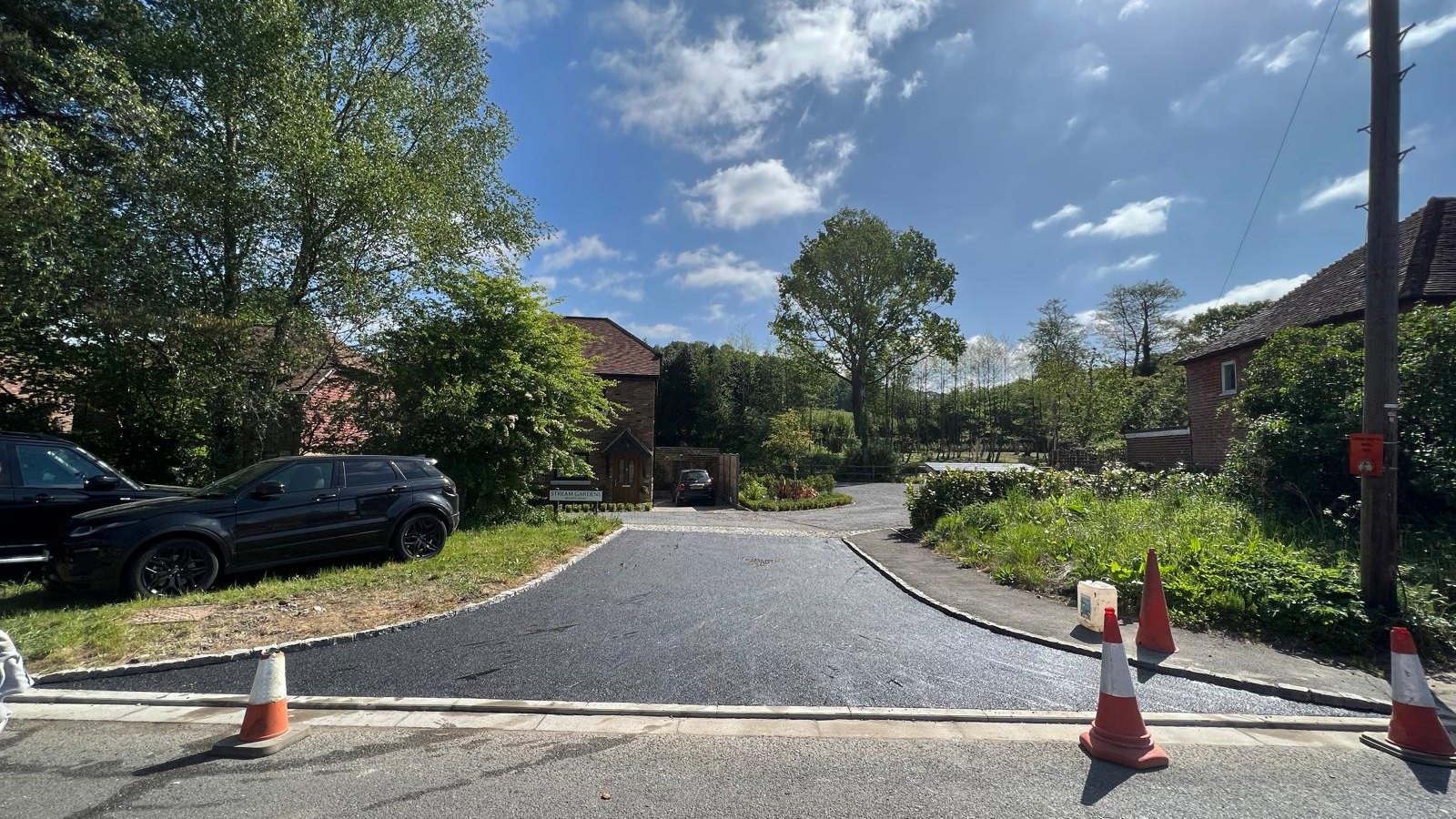
Road Surfacing completed by London Tar in Surrey

How we work

From survey to finished surface

  1. 1

    Free site survey

    A visit to look at the road, take measurements and hear what you need, with nothing to sign afterwards.

  2. 2

    Written quote

    An itemised price in writing before work begins, so you know what each part of the job costs from the outset.

  3. 3

    Groundwork and preparation

    Digging out to the depth the road needs, laying and compacting the sub-base, and setting drainage and edges.

  4. 4

    Laying and compaction

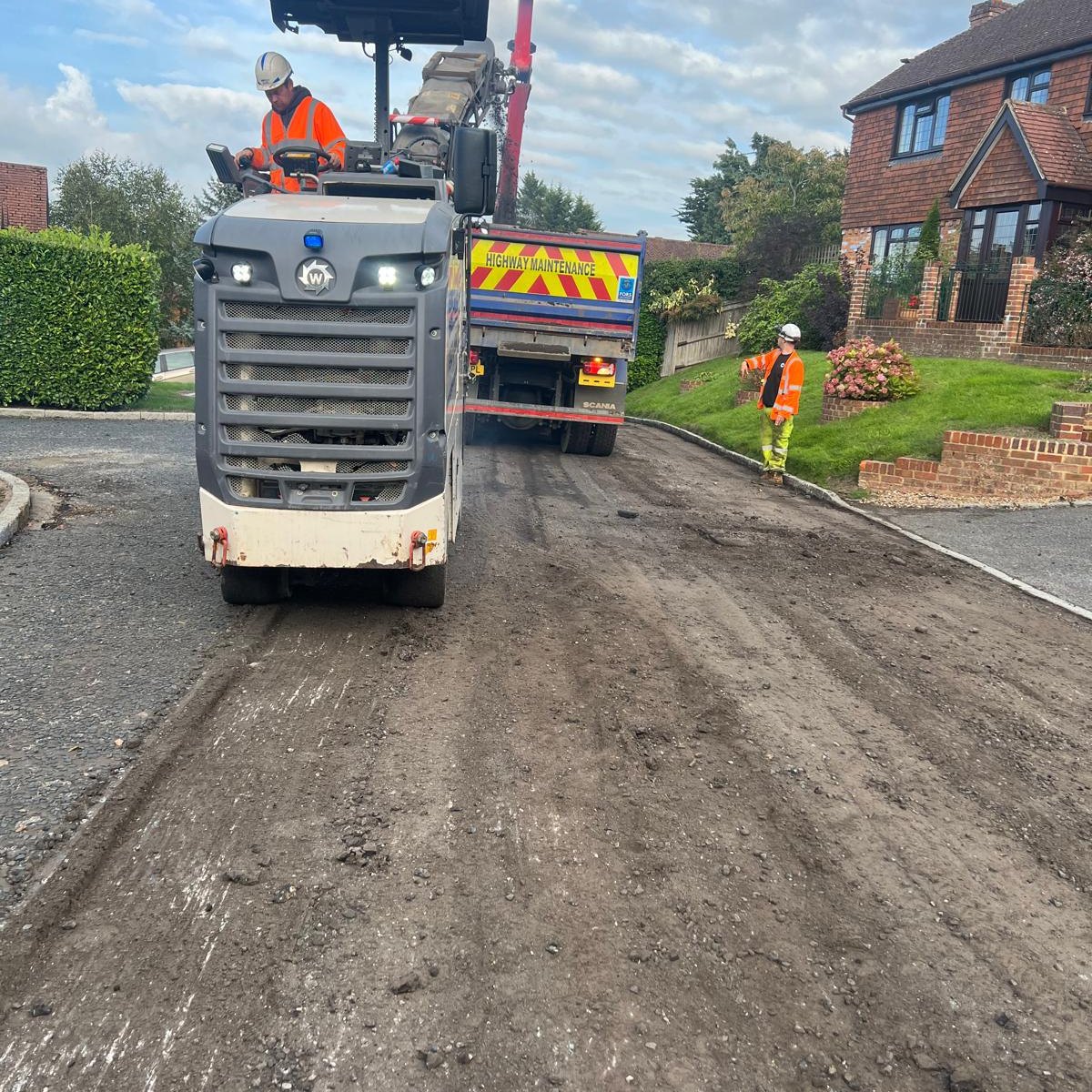
    Machine laying wherever the site allows, then rolling for a level surface that stands up to wear.

  5. 5

    Sign-off and clear-up

    A walk round the finished road together, with all waste removed and the site left clean.

Pricing

How much does road surfacing cost?

Your price comes from a free survey of the road itself. These are the factors that move it most:

  • How long and wide the road is
  • What traffic uses it, from cars up to HGVs
  • The state of the existing base, for a resurface
  • Any kerbs, drainage or markings required
Road Surfacing by London Tar in Surrey

Why choose us

Why choose London Tar for road surfacing

A fresh surface is what you see. The difference lies in how the road underneath is built and how the work fits around the people using it.

Build depths set by the loads your road really takes

Drainage planned from the start, never bolted on later

One team for the marking, kerbs and edges

Areas we cover

Road Surfacing across Surrey

London Tar surfaces roads for commercial and residential clients right across Surrey. Call 0207 305 5991 for a free quote wherever your road is in the county. Road surfacing in towns across Surrey:

Covering Surrey

45+ towns & boroughs

FAQs

Road Surfacing FAQs

Do you resurface roads on occupied estates?

Yes. Most private roads in Surrey serve sites that cannot simply close, so the work is split into phases that keep occupiers and deliveries moving wherever possible. You receive a clear programme with the quote, showing which sections are worked on when, so tenants can be told in advance. Fresh tarmac is usually ready for traffic after 24 to 48 hours, which keeps each closure short.

Can you deal with drainage problems at the same time?

Yes. Gullies, channels and the falls of the road can all be built in while it is open, so standing water on your site is dealt with in the same job. Ponding is often a falls problem rather than a shortage of gullies, so the levels are looked at first. Covers and gratings in a road used by HGVs need a load rating to match the traffic that crosses them.

Do you install speed bumps and traffic calming?

Yes. Speed bumps, ramps, bollards and give-way markings can be built into a site road scheme. The Highways (Road Humps) Regulations 1999 cover humps in a public highway, setting heights of 25mm to 100mm and a minimum length of 900mm. On a private road the owner decides, but those figures make a sensible benchmark. Agree the layout with occupiers first, especially any that run delivery vehicles.

Do you handle the kerbing and channels too?

Yes. Edge kerbs, drainage channels and edgings are part of the job and are laid by the same team as the surface. On a site road the kerbs hold the edge of the surface in place and the channels carry water away, so they belong in the same plan. You get a finished road with its edges complete, not new tarmac sitting against tired kerbs.

How long does a private road resurface take?

That depends on the road's length and on whether it is an overlay or a full rebuild. Once the road has been surveyed, you receive a clear programme alongside the quote, so you can plan around tenants, deliveries and site operations. Where occupiers need to keep getting in and out, the work is phased to hold access open wherever possible, section by section.

Who is responsible for resurfacing a private estate or business park road?

Usually the owner, or a management company acting for the owners. Surrey County Council states that it does not maintain private roads and cannot progress requests about problems on them. You can check on the Surrey Interactive Map using the 'Publicly maintained roads' layer, where unadopted roads show in white. Who pays, and how costs pass to occupiers, is set by your deeds and leases, so a solicitor is the person to confirm it.

Is it worth bringing our road up to adoptable standard so the council takes it on?

Often not, for an existing road. Surrey County Council says it does not normally adopt existing roads. Where the owners fund the full cost of reaching the standard, which is based on Manual for Streets, its Highways Information Team will help, and it recommends independent advice. Adoption usually means kerbs, footways, surface water drainage and lighting as well, and the council alone decides. Many site owners opt for a good private specification instead.

Can our road just be overlaid, or does it need rebuilding?

That depends on what is underneath, and the free survey is where it gets decided. A sound base with surface wear can usually take an overlay. Rutting, sinking, or cracks that return after patching point to a failing base, often where HGVs turn and brake, and an overlay laid on top of that tends to fail early. An overlay also raises levels at kerbs, drains, ironwork and building entrances, which needs planning.

How much does it cost to resurface a private road in Surrey?

There is no fair flat rate, because each site road is different. The price depends mainly on its length and width, whether it needs an overlay or a full rebuild, the condition of the existing base, the traffic it carries, from cars to HGVs, and any kerbing, drainage or marking. A free site survey gives you a clear, itemised written quote, which makes approval and budgeting simpler for owners and managing agents.

How long should a resurfaced private road last?

Council guidance gives a useful yardstick. Kent County Council puts surface dressing and micro asphalt at up to 10 years, and resurfacing that removes the deteriorated layers at no less than 15. The 2026 ALARM survey found local roads in England and Wales are resurfaced on average once every 97 years, so a private site road needs its own maintenance plan. Thin layers, weak compaction, poor drainage and heavy vehicles all shorten life.

What should a private road quote include so the job isn't skimped?

It should show exactly what you are paying for: overlay or rebuild, the depth of sub-base and each layer, how drainage and edges are handled, what happens to levels and ironwork, payment stages and clear-up. Asphalt laying and compaction is covered by BS 594987. A retention only protects you if the contract includes it. HSE guidance treats work done in connection with a business as non-domestic under CDM 2015, so check the client duties that apply.
Call nowGet a quote