London Tar — Surfacing Contractors
Tarmac Surfacing by London Tar in Surrey

Tarmac Surfacing in Epsom

Machine-laid tarmac surfacing for Epsom private roads, paths, playgrounds and hardstanding, built on a solid base.

01372 626753

Get a free quote

Tell us about your project and we’ll be straight back with a free, no-obligation quote.

Machine-laid finish

Ready in 24–48 hours

Neat, level edges

Free site survey

Overview

Tarmac Surfacing in Epsom

Planning tarmac surfacing in Epsom? London Tar covers Epsom, along with the whole of Surrey.

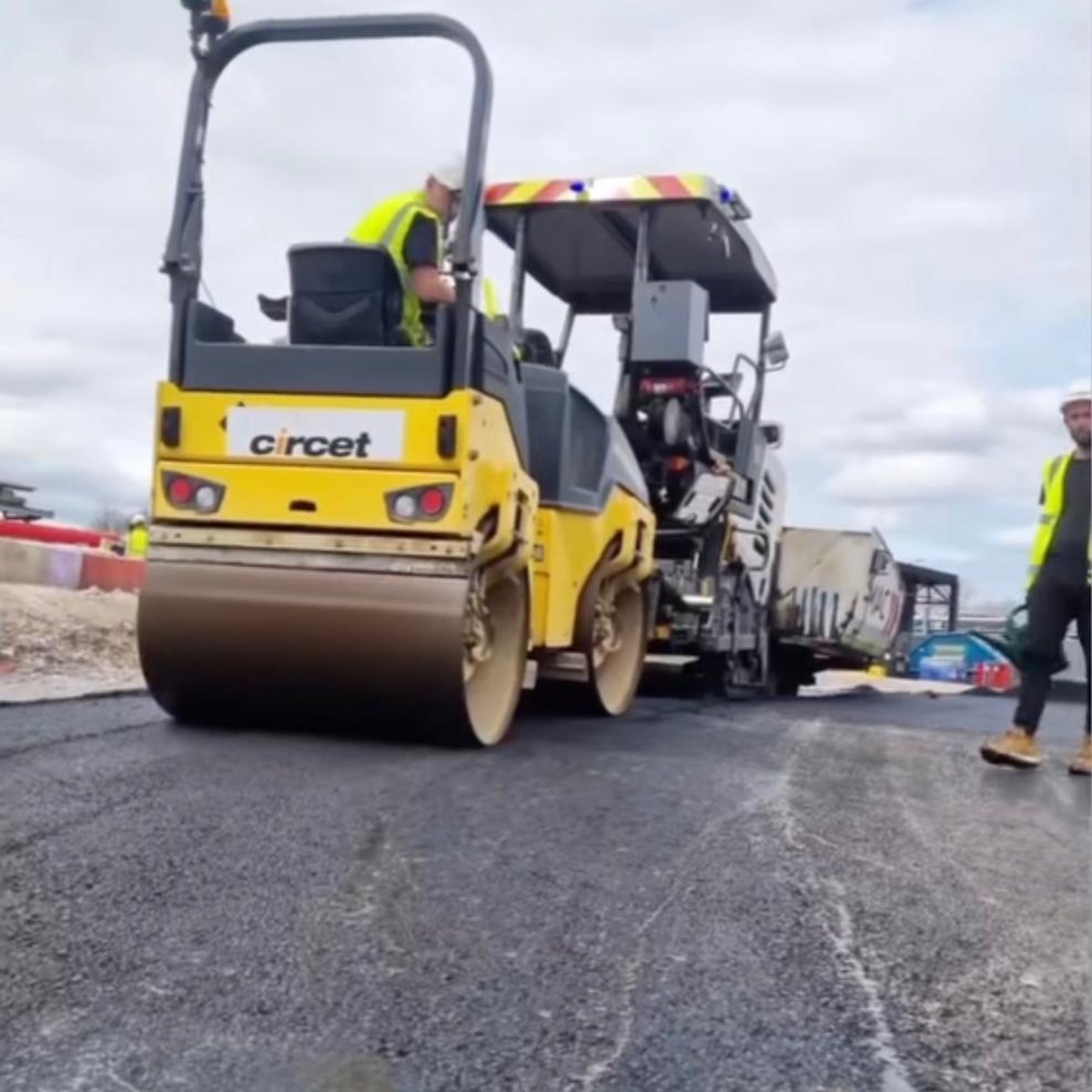
Tarmac stands up to foot and vehicle traffic at a cost that stays sensible, which makes it right for most surfaces. London Tar lays it in Epsom for school grounds, footpaths, private roads, yards, hardstanding and playgrounds, using British Standards materials and suitable plant for a smooth, even finish.

You will not find many surfaces as versatile. Tarmac is laid fast, usually returns to use in a day or two, and costs less per square metre than resin or block paving. For heavier use we lay a base course followed by a surface course, rolled hot to a dense, even finish and edged neatly at kerbs, buildings and older surfaces. Because a finish is only as good as what lies under it, the ground is excavated to the correct depth and each layer compacted before the surface course.

What’s included

  • Clearing the site and digging to the required depth
  • A compacted sub-base right for the use
  • Base and surface course, laid by machine and rolled hot
  • Neat finishing at kerbs, buildings and existing surfaces
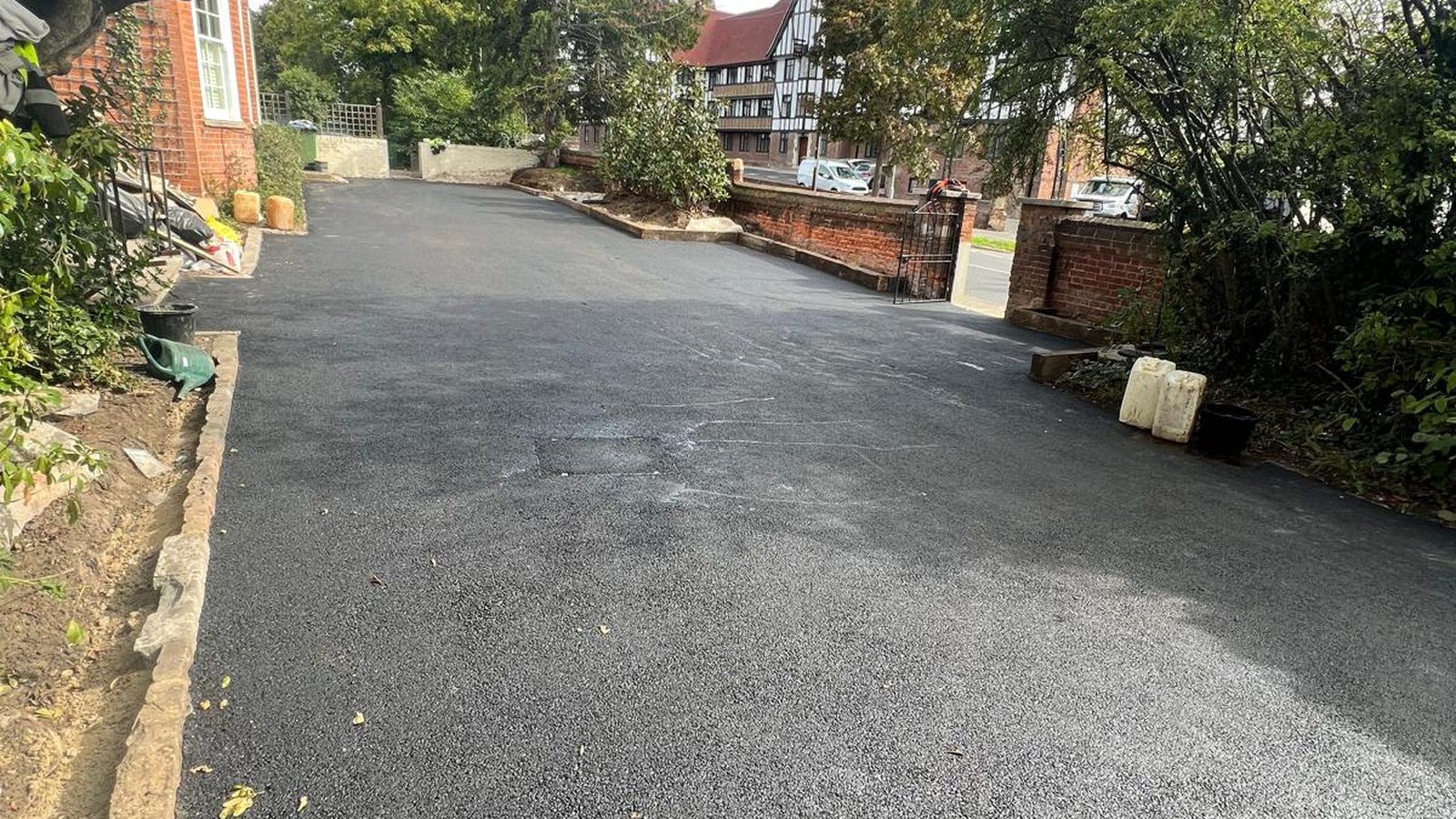
Tarmac Surfacing completed by London Tar in Surrey

How we work

From survey to finished surface

  1. 1

    Free site survey

    Measuring up and talking through your needs happens on site, at no cost and with no commitment.

  2. 2

    Written quote

    We put an itemised price in writing for you ahead of the work, so nothing unexpected follows.

  3. 3

    Groundwork and preparation

    Correct excavation depth, a compacted sub-base and carefully set drainage and edgings form the groundwork.

  4. 4

    Laying and compaction

    We machine-lay where the job allows, then compact the tarmac to a level surface built for wear.

  5. 5

    Sign-off and clear-up

    We look over the completed surface with you and take our waste away, so the site is clean.

Pricing

How much does tarmac surfacing cost?

A free site survey comes before any quote, and these are what shape the final price:

  • Overall size and access for machinery
  • How deep we excavate and the sub-base needed
  • One or two tarmac layers
  • Edging and drainage
Tarmac Surfacing by London Tar in Surrey

Why choose us

Why choose London Tar for tarmac surfacing

There is the finish, and then there is everything behind it. Our edge is in how surfaces are built and how we fit in around you.

Compacting every layer, for a surface that lasts

Materials to British Standards, from approved suppliers

Levels and clean edges checked before we leave

Areas we cover

Tarmac Surfacing near Epsom

London Tar handles tarmac surfacing for homes and businesses in Epsom and across Surrey. Call 01372 626753 for a free quote, whichever part of the county you are in. Tarmac surfacing in nearby towns:

See tarmac surfacing across all of Surrey →

Covering Surrey

45+ towns & boroughs

FAQs

Tarmac Surfacing FAQs

Is tarmac suitable for a sloped site?

Yes, with the drainage planned in. Tarmac performs on slopes as well as on the flat, but rainwater will follow the gradient, so we set falls that take it away from buildings and add a channel or gully where the ground runs towards them. On an Epsom yard or set of grounds, that keeps runoff away from entrances and walkways, and supports planning rules that look for water to reach a permeable area.

Can you match into an existing tarmac surface?

Yes. We cut the existing surface back to a firm edge and tie the new tarmac into it, so the seam holds together once vehicles start using it. That is useful when an Epsom car park, yard or access road needs extending or one section replacing without resurfacing the lot.

How thick should a tarmac surface be?

Deeper for heavier vehicles. Tarmac sits on a compacted sub-base, with a binder course and a surface course above it, and every layer gets thicker as vehicles get heavier. A footpath needs much less than a service road for vans or a yard for HGVs. British Standards set minimum thicknesses per mix. Sinking under heavy wheels usually means a weak sub-base. Tell us what will use your site and the build-up goes in writing in your quote.

How soon can I use it after laying?

Within 24 to 48 hours in most cases, depending on weather and layer thickness, and the precise timing is confirmed before starting so you can let staff, tenants and delivery drivers know. Tarmac hardens over several weeks after that, slower in hot weather. Vehicles should not turn their wheels while parked, and jacks, stands and skips should stay off until it has firmed up.

Do you offer coloured tarmac?

Yes. Red and other coloured tarmacs are offered wherever plain black is not the right look, so a pedestrian route, play area or reserved zone can be told apart from the rest of the surface. You can see the options when we visit your Epsom site for the survey.

Do we need planning permission to tarmac a yard, forecourt or car park?

In many cases no, though size and drainage decide it. Part 7, Class E permitted development usually allows up to 50 m² of new hard surface at qualifying commercial premises, provided it is porous or drains to a permeable area. Listed buildings are excluded, and industrial premises and schools follow separate classes. We cannot give legal advice, so check with the council.

Can you lay tarmac over an existing concrete or tarmac surface?

Yes, if the surface underneath is sound and stable. Overlaying avoids the cost of full excavation, which national price guides say can save up to 30 to 40%. If the existing base is cracked, rocking or sinking, the new layer will follow it down, so it should be dug out. Each mix also has a minimum layer thickness under British Standards. We assess the base during the survey and tell you honestly.

Is tarmac cheaper than block paving, resin or concrete for a commercial site?

Yes, in most cases. National price guides put tarmac per square metre below concrete, block paving and resin bound, with gravel cheaper. As the guides disagree on figures, compare quotes for the same area and sub-base. Think about upkeep and life across the site as well: block paving lasts around 20 to 30 years but needs more maintenance, while tarmac is plainer, non-porous and can fade.

How much does tarmac surfacing cost in Epsom?

It depends on your Epsom site, so we survey free before quoting. Price is driven by area and shape, the loads it carries, access for machinery, excavation and sub-base depth, single or two-layer construction, edging, drainage and waste removal. If you need a new crossover, a council fee applies. National guides note higher costs around London. You get a clear, itemised written quote showing what each element costs, with no obligation.

Can tarmac be laid in the rain or in winter?

Yes in light rain, no on standing water, ice or snow, which the British Standard for laying asphalt rules out. Winter adds risk because thin surface layers lose heat quickly on cold, windy days and tarmac must be rolled hot. Guides advise against laying in heavy rain or below 5°C ground temperature. We confirm your site timings in advance, so the work can be planned around your operations.

How long does a tarmac surface last, and why do some break up early?

Up to around 15 years by national guide figures, and 15 to 20 years or more with maintenance. Early break-up is usually down to the build: a thin or poorly compacted sub-base sinks under heavy vehicles and lets covers lift, a single thin layer crumbles or pits, and open seams let water in. We dig out to depth, compact each layer and hot-roll a base and surface course.
Call nowGet a quote