London Tar — Surfacing Contractors
Tarmac Surfacing by London Tar in Surrey

Tarmac Surfacing in Esher

Footpaths, private roads, playgrounds and hardstanding surfaced in machine-laid tarmac across Esher.

01372 626753

Get a free quote

Tell us about your project and we’ll be straight back with a free, no-obligation quote.

Machine-laid finish

Ready in 24–48 hours

Neat, level edges

Free site survey

Overview

Tarmac Surfacing in Esher

If tarmac surfacing in Esher is what you need, London Tar covers Esher and works throughout Surrey.

Few surfaces handle everyday foot and vehicle traffic as economically as tarmac. In Esher, London Tar lays it for private roads, yards, playgrounds, footpaths, school grounds and hardstanding, with British Standards materials and well-matched plant that leave the surface smooth and even.

Quick to lay and ready for traffic in a day or two, tarmac also undercuts block paving and resin on price per square metre. When the use calls for it, you get a base course topped with a surface course, rolled hot into a dense, even finish and edged neatly where it meets kerbs, buildings and existing surfaces. All of that depends on the groundwork, which is why the site is excavated to the right depth and each layer compacted before the top course is laid.

What’s included

  • Excavation to the right depth once the site is cleared
  • Compacted sub-base suited to the expected traffic
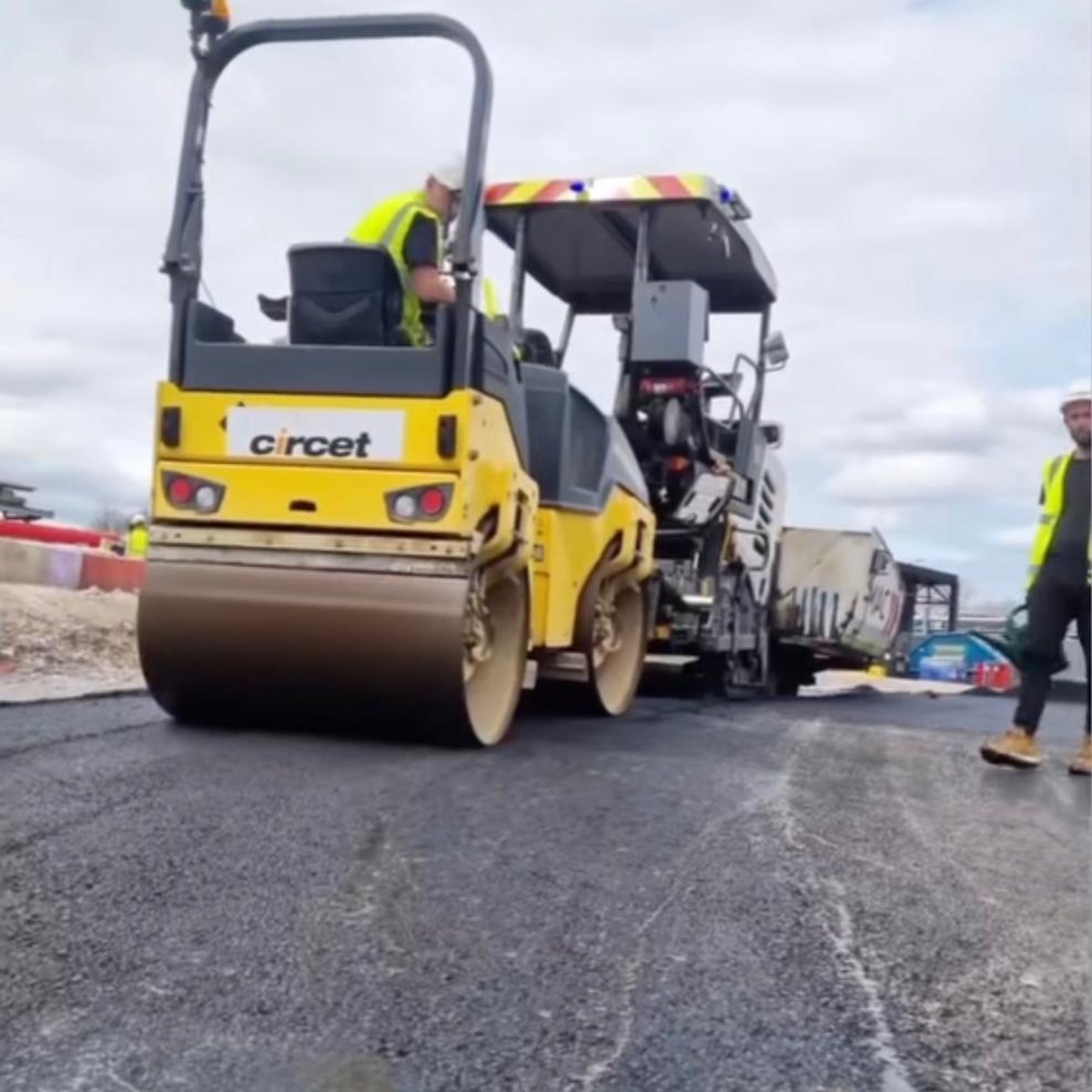
  • Rolled base and surface courses, machine-laid
  • Edges finished cleanly against kerbs, buildings and existing surfaces
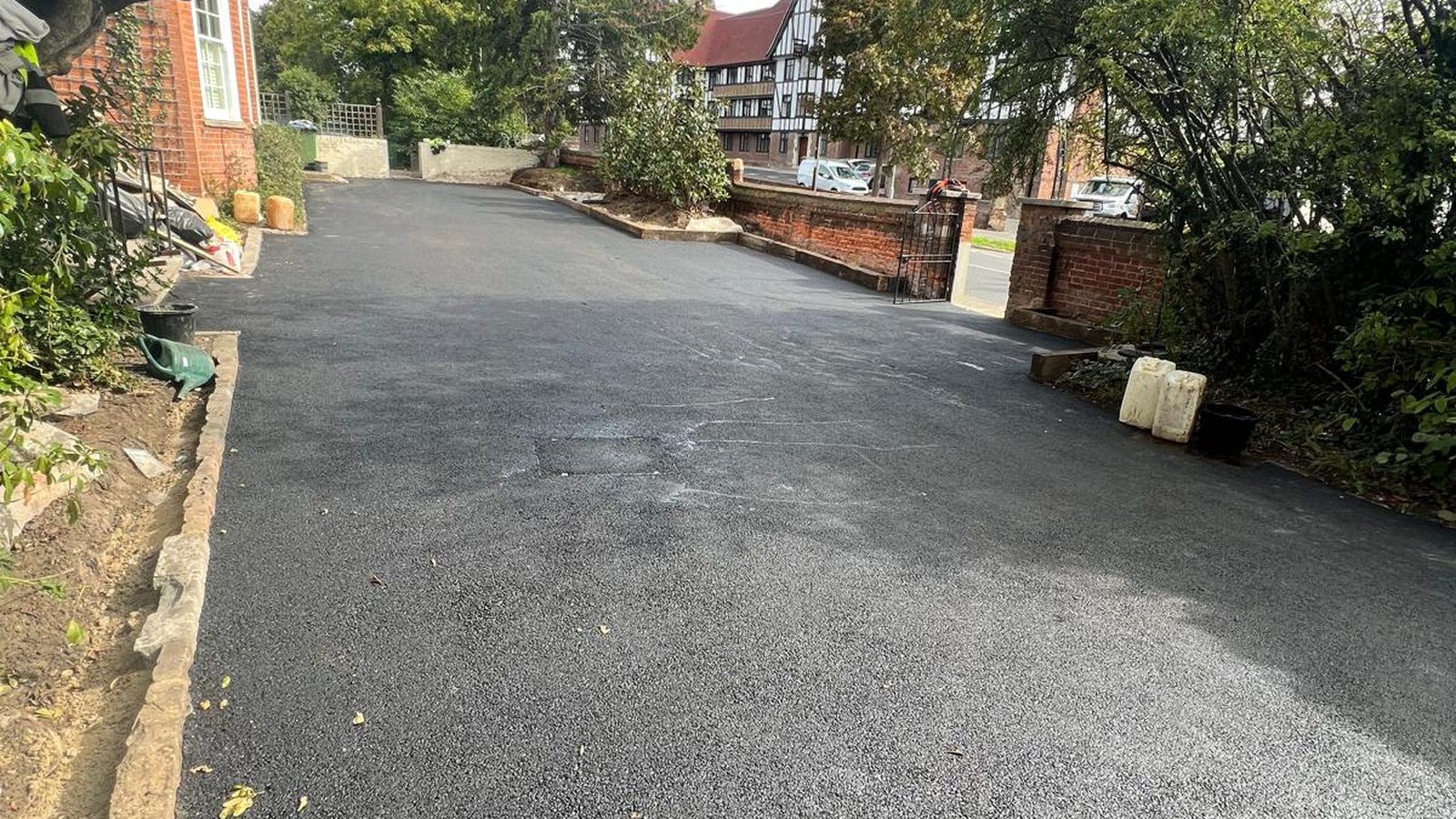
Tarmac Surfacing completed by London Tar in Surrey

How we work

From survey to finished surface

  1. 1

    Free site survey

    On the visit we measure, check the site and discuss what you are after. Nothing commits you to booking.

  2. 2

    Written quote

    Costs are set out line by line in writing, before any work is booked in, so you are not caught out.

  3. 3

    Groundwork and preparation

    The base is dug to the depth your use needs, sub-base compacted, with drainage and edges finished first.

  4. 4

    Laying and compaction

    Where we can get machinery in, it lays the tarmac, and rolling then leaves it level and hard-wearing.

  5. 5

    Sign-off and clear-up

    Handover is a walk over the finished job with you, followed by a full clear-up of our waste.

Pricing

How much does tarmac surfacing cost?

You are quoted only once we have surveyed the site for free. Key cost factors:

  • How much area there is and how plant gets in
  • The depth of excavation and sub-base
  • Whether one or two layers are used
  • Drainage plus edging
Tarmac Surfacing by London Tar in Surrey

Why choose us

Why choose London Tar for tarmac surfacing

Good looks are only part of the job. The real difference is in the construction and in how we work around your site.

Compaction of each layer, so the surface stays firm

Materials from approved suppliers, to British Standards

A level, tidy finish checked before we leave

Areas we cover

Tarmac Surfacing near Esher

London Tar lays tarmac for domestic and commercial clients in Esher and everywhere else in Surrey. For a free quote anywhere in the county, give us a call on 01372 626753. Tarmac surfacing in nearby towns:

See tarmac surfacing across all of Surrey →

Covering Surrey

45+ towns & boroughs

FAQs

Tarmac Surfacing FAQs

Is tarmac suitable for a sloped site?

Sloping ground suits tarmac fine. Drainage is the part that needs thought: falls are set to move rainwater away from buildings, with a gully or channel added if the land leans towards them. For an Esher site with sloping access, that keeps water off the routes staff and visitors walk, and it is built into the design so runoff reaches a permeable area, as planning rules expect.

Can you match into an existing tarmac surface?

Matching in is straightforward. The old tarmac is cut back to a firm edge and the new surface tied into it, so the join stays firm rather than lifting. You can extend a forecourt, add to a car park or replace a broken run of an access road in Esher and have it meet the old surface cleanly.

How thick should a tarmac surface be?

Heavier traffic needs a thicker build. A tarmac surface is a compacted sub-base with a binder course and surface course on top, and each layer deepens as loads go from pedestrians to cars, vans and HGVs. British Standards set minimum thicknesses per mix. When tarmac sinks under parked lorries or trailers, the sub-base has usually failed. Tell us what will use the site and we write the build-up into the quote.

How soon can I use it after laying?

A day or two is typical: 24 to 48 hours, depending on weather and layer thickness, with the precise timing confirmed in advance so you can plan staff access and deliveries. Full hardening takes weeks and is slower in hot weather. In that time, drivers should avoid turning their wheels while stationary, and jacks, stands and skips should be kept off the surface.

Do you offer coloured tarmac?

Coloured tarmac is available, including red, for any part of a site where plain black is not wanted. It can help a walkway, play area or set-down zone stand apart. We bring the options to the survey, so you can see them against your Esher site.

Do we need planning permission to tarmac a yard, forecourt or car park?

Small, well-drained areas often do not need it. Part 7, Class E permitted development usually lets qualifying commercial premises lay up to 50 m² of new hard surface, if it is porous or drains to a permeable area. Listed buildings are outside the rules, and schools and industrial premises are covered by separate classes. This is an outline only, not legal advice, so check with the council.

Can you lay tarmac over an existing concrete or tarmac surface?

Overlaying works when the base is sound. Firm concrete or tarmac can take new tarmac on top, and national price guides put the saving at as much as 30 to 40% compared with digging out. If the existing surface is cracking up or shifting, those faults will show through, so removal is needed. British Standards set minimum thicknesses per mix. At the survey we check the base and give you an honest recommendation.

Is tarmac cheaper than block paving, resin or concrete for a commercial site?

Tarmac is generally the cheaper option. National price guides rank it below resin bound, block paving and concrete per square metre, with gravel lower still. Their figures vary, so compare quotes for the same area and sub-base. Consider lifespan and upkeep too: block paving can last 20 to 30 years but needs more regular care, and tarmac is less decorative, non-porous and can fade.

How much does tarmac surfacing cost in Esher?

Esher prices are set site by site after a free survey. The main drivers are the size and shape of the area, the vehicles using it, access for plant, excavation and sub-base depth, the number of layers, edging, drainage and waste removal. A new crossover adds a council fee, and national guides note higher costs near London. You receive a clear, itemised written quote so every part of the cost is visible.

Can tarmac be laid in the rain or in winter?

Light rain is usually fine; standing water, ice and snow are not, as the British Standard for asphalt states. Cold matters too: tarmac has to be compacted hot, and thin surface layers cool quickly on windy days. Guides advise against laying in heavy rain or below 5°C ground temperature. Timings for your site are confirmed with you before starting, so access can be planned.

How long does a tarmac surface last, and why do some break up early?

Well-laid tarmac lasts up to around 15 years by national guide figures, or 15 to 20 years or more with maintenance. Early failure, such as crumbling, pitting, sinking, lifting round covers or ponding, usually comes from a thin or poorly compacted sub-base, a single thin layer or open seams. We excavate to depth, compact each layer and roll a base and surface course hot to prevent it.
Call nowGet a quote